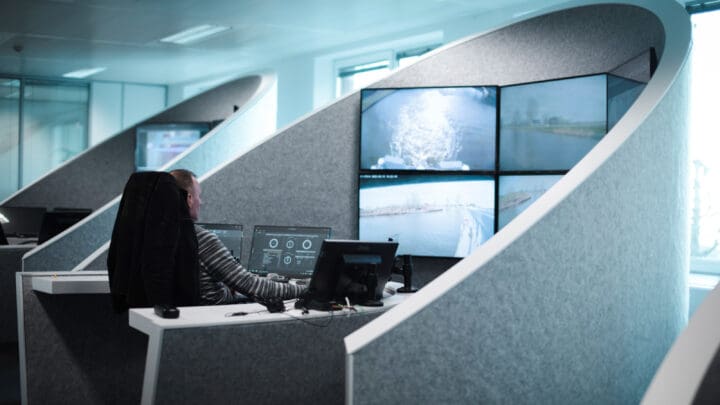
The approval marks a significant step in HGK Shipping’s strategy to address the growing shortage of skilled personnel in inland navigation and to optimise operational efficiency. The permit enables the vessel to be steered remotely on waterways east of Antwerp, potentially extending navigation times while reducing onboard crew requirements.
Europe’s largest inland shipping company said the move demonstrates how digital technology can support safer and more flexible transport operations. The chemicals tanker Walcheren is the first vessel in HGK Shipping’s fleet to make use of this innovative approach in the Flemish region, allowing for an optimised crew size.
“Smarter use of personnel is the purpose of our efforts to introduce remote-controlled inland waterway shipping in order to address the serious shortage of specialist workers, which is expected to intensify in the future,” said Steffen Bauer, Chief Executive Officer of both the HGK Group and HGK Shipping.
“The permit issued in Flanders, which allows a reduction of one skipper in certain operational scenarios, represents an extremely important milestone. The fact that it applies to a hazardous goods vessel shows that the technology has convinced the authorities of its safety and reliability.”
During earlier test phases, vessels were already being controlled remotely from ROCs in the Netherlands and Germany, although the full onboard crew was still required under existing personnel regulations. With the new permit in Flanders, this is no longer necessary on the designated routes, following successful validation of the technology developed by project partner SEAFAR.

In phase three of the project, HGK Shipping will operate the Walcheren with one skipper and one sailor onboard, instead of two skippers, during regulated “A2 navigation time” of up to 18 hours. For a four-hour period, a qualified ROC operator will remotely control the vessel, while the sailor monitors operations from the wheelhouse and the onboard skipper takes a rest period.
The company said the transition to this model requires intensive training and close coordination between all project partners to ensure operational safety and regulatory compliance.
“The fact that the Walcheren, a chemicals tanker, has been selected for this phase underlines the high level of trust the authorities in Flanders place in the technology, even for sensitive cargo,” Bauer added. “Following the success of phase two in the Netherlands and Germany, we expect similar progress there through continued cooperation with the relevant authorities.”
HGK Shipping is continuing to invest in remote-control technology as part of its long-term strategy to modernise inland navigation, improve working conditions and make maritime careers more attractive. Newly commissioned vessels are already equipped with the necessary systems, while older ships will be gradually retrofitted as required.
The company believes that remote-controlled operations will play a key role in ensuring safe, efficient and resilient inland shipping, particularly in the face of increasing demand and a tightening labour market.