The award was presented at the LogiChem Conference, a leading industry event focused on innovation in chemical supply chains, and recognises the Group’s Low-Carbon Chemical Supply Chain Initiative for delivering measurable results alongside continued operational reliability.
At its Belgian terminal, GADOT Belgium installed an on-site wind turbine generating approximately 10 GWh of renewable electricity per year, supplemented by heat sourced from non-recyclable wood waste biomass. Together those measures reduce emissions by more than 6,000 tonnes of CO₂e annually.
Wim De Windt, CEO of GADOT Belgium, said integrating renewable energy directly into terminal infrastructure was central to meaningful supply chain decarbonisation. “By integrating renewable energy generation and circular energy solutions directly into terminal operations, we can significantly reduce emissions while continuing to provide reliable logistics services to our customers,” he said.
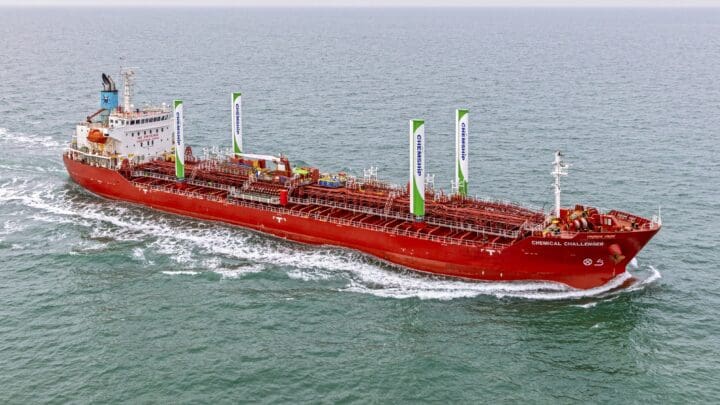
On the maritime side, Chemship — GADOT Europe’s shipping division — retrofitted chemical tanker MT Chemical Challenger with wind-assisted propulsion systems (WAPS), which the company says made it the first chemical tanker in the world to carry the technology. Additional efficiency measures across the fleet, including low-friction hull coatings, propeller boss cap fins, fuel optimisation software and improved lubricants, bring total annual fleet CO₂ savings to approximately 7,900 tonnes.
Niels Grotz, CEO of Chemship, said the results demonstrated that significant emissions cuts were achievable now, without compromising safety or service standards. Chemship operates 15 chemical tankers, and contracts have already been signed to fit WAPS on two further vessels.

Across both terminal and fleet operations, the initiative currently delivers combined annual reductions of approximately 13,900 tonnes of CO₂e.