Local media are reporting that customs investigators believe the shipments should incur a 150 percent duty, while importers claim that a preferential rate of 75 percent under the India–United Kingdom trade agreement is applicable. Agrawal said India would honour its tariff commitments and that the Department of Revenue was working with stakeholders to resolve the issue within days.
The dispute centres on how the cargo is classified when it enters India. Heading 2208 of the Harmonised System (HS), the international framework used to classify traded goods, covers spirits including whisky. Customs investigators have argued that some shipments should fall under heading 2106 as ‘compound alcoholic preparations’ because the product arrives at higher strength and undergoes further processing in India. That classification would attract the 150% rate sought by investigators.
Importers maintain that the product remains Scotch whisky when shipped in bulk for blending or bottling in India. Agrawal described the dispute as a technical question involving tariff lines that carry different rates. The immediate issue for cargo clearance is whether the product as imported meets the description and origin requirements for the preferential tariff.
It is believed that shipments linked to global drinks conglomerates Pernod Ricard and Diageo are among those waiting for clearance. The Directorate of Revenue Intelligence (DRI), which operates under the Finance Ministry, circulated a memorandum, seen by Reuters, on 4 November asking customs officials to apply the higher rate to bulk shipments it considers compound alcoholic preparations.
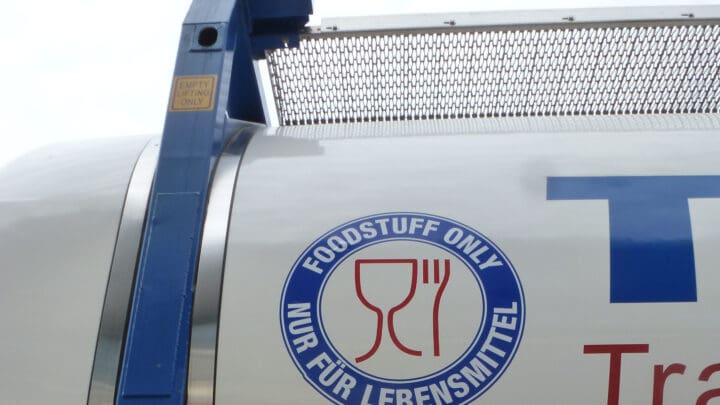
Details of how the product was shipped are not clear, but it is known that bulk Scotch whisky is often transported in foodgrade tank containers for international movements.

On arrival, it is discharged and moved to a licensed storage or processing facility, where the contents can be transferred into bulk storage tanks before blending or bottling.
The use of ISO tanks allows the spirit to move through an established intermodal network, reducing the need for individual bottles, cartons and other retail packaging at the export stage.
It also provides greater flexibility for importers, which can receive large consignments and manage their blending and bottling operations according to local demand.