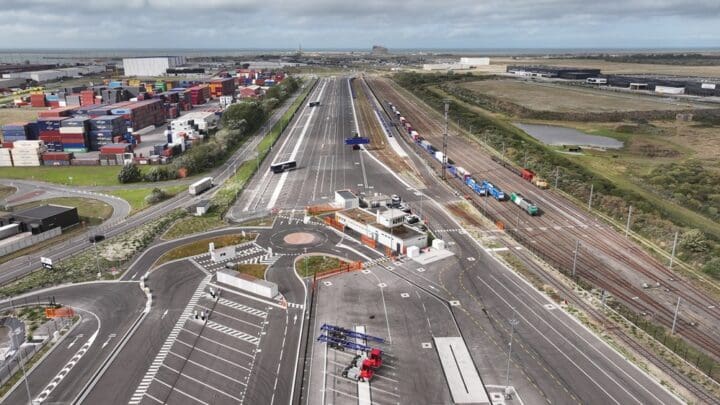
Located along the Loon-Plage railway line, the terminal has been designed to serve a wide variety of cargo sectors.
Alongside conventional intermodal traffic, it can handle equipment used for dry bulk transport, including powders, granules and other industrial materials, as well as tanks carrying liquid food products and chemicals.
The site is also equipped to accommodate specialist cryogenic and high-pressure tanks, reflecting growing demand for the transportation of industrial gases and emerging low-carbon energy products.
Infrastructure at the terminal includes four 750-metre rail tracks, storage capacity for 800 TEU and parking for 150 semi-trailers. It can process containers, swap bodies and road-rail semi-trailers ranging from 20ft to 45ft in length.
Additional services include maintenance for intermodal units, wagons and locomotives, along with electrical connections for refrigerated containers and charging points for heavy goods vehicles.
According to the project partners, the terminal could eventually transfer up to 50,000 intermodal transport units from road to rail annually. This would deliver potential carbon savings of approximately 70,000 tonnes of CO₂ per year.
The development forms part of a wider strategy to strengthen European rail freight corridors and support the decarbonisation of supply chains.
With direct access to port facilities and future links to Italy, the terminal is expected to play an increasingly important role in the movement of bulk commodities, tank containers and other intermodal freight across Europe.