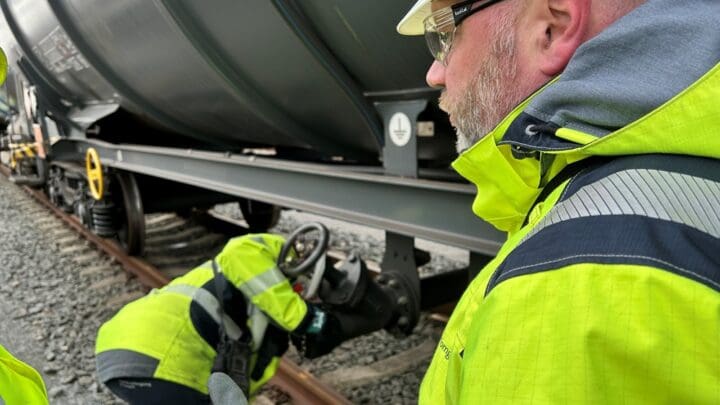
Government body the Human Environment and Transport Inspectorate (ILT) reported on 22 January that the number of leaks it detected in 2025 was more than 400, a surge over the 52 reported in 2024, and 26 in 2023.
The ILT has been monitoring so-called droplet leaks: small amounts of liquid that leak from wagons during driving, moving, shunting or standing still.
Arjan Grob, co-ordinator of hazardous substances rail at ILT, said that the reports usually involve relatively small amounts of liquid that leak from wagons during shunting, standing or driving.
However, while seemingly harmlessly, Grob added: “What starts with a few drops can end in a costly remediation project or long-term environmental impact.”
In 2025, ILT began the ‘Loading and Unloading’ project, which focuses on improving and preventing droplet leaks at the front end.
It has held discussions with safety organisation, the trade association for tank storage companies and the chemical industry. Workplaces have also been monitored during actual loading and unloading, with the findings shared with stakeholders.

The Regulations for the International Carriage of Dangerous Goods by Rail (RID) contain clear rules on the checks to be carried out after the loading or unloading of tank wagons or tank containers.
For example, RID prescribes that it must be established that valves are correctly closed.
In order to comply with RID, terminals must create their own procedures that are in line with the regulations. And, according to RID, a purely visual inspection is not sufficient.
As a result of the ‘Loading and Unloading’ project, ILT expects the number of reports of droplet leaks to decrease. However, Grob is urging operators to remain vigilant.