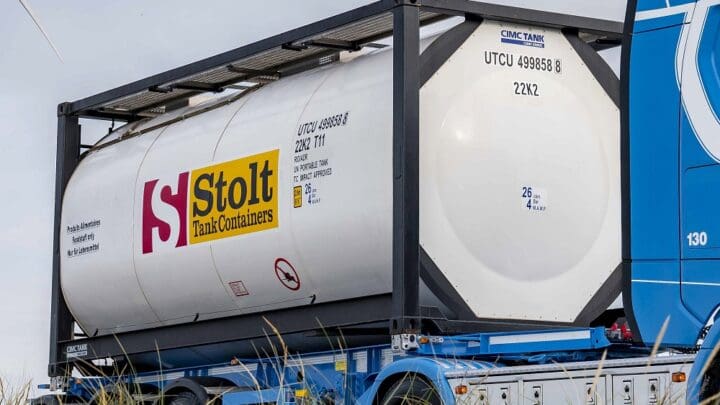
In the seasonally weak first quarter, underlying volume (excluding the addition of Suttons) improved slightly, however transport margins remained under pressure.
STC reported a first-quarter operating loss of $5.2 million (€4.4 million), or $0.1 million loss adjusted for Suttons integration costs, compared to an operating profit of $15.2 million (€13 million), in the first quarter of 2025.
The reduction in transport margins was amplified by lower demurrage and ancillary revenue.
Repositioning costs increased due to imbalance in trade flows across regions, while maintenance and repair expense increased due to inflationary pressures, and administrative and general expense increased due to scaling up of operations.
Market visibility has deteriorated materially, with a very fluid situation creating heightened uncertainty in the Middle East in particular, parent group Stolt Nielsen said.

“The Strait of Hormuz is a critical trade route, handling approximately 15-20% of global seaborne oil, petroleum products, and chemicals as well as a significant share of chemical feedstocks including LNG and LPG,” a statement read.
“Disruption to trade flows is creating tangible effects in chemical markets, with volatile energy prices, shifting feedstock availability and increased activity in the US Gulf contrasting with a slowdown in other regions. We are also seeing spillover effects, including elevated bunker prices and availability constraints East of Suez, which are adding to the operational complexity for all market participants.
“Even in a peace scenario, it is unclear how long it will take to repair damaged facilities, restart production, and clear the shipping backlog, adding further to the uncertainty.”