
News
HGK Shipping has called for a Europe‑wide fleet renewal programme to deliver up to 1,000 modern, shallow‑water‑capable inland vessels by 2035, warning that current low water levels on the Rhine show the urgent need for action.
The Cologne‑based operator says Germany must lead the effort by establishing a long‑term funding framework that unlocks private investment and strengthens European shipbuilding.
Water levels on the Middle Rhine have dropped to 16cm at Kaub, with forecasts pointing to further declines. HGK says the impact on transport capacity is already severe, with shallow‑water‑optimised vessels proving critical to maintaining supply chains.
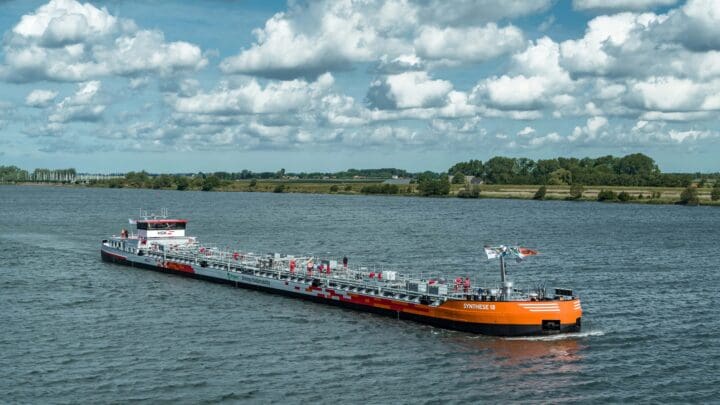
Its own fleet includes nine such vessels developed since 2018, including Synthese 18, which is still carrying 485 tonnes despite the extreme conditions.
HGK warns that the 2026 low‑water period is already weighing on Germany’s economy, with GDP growth expected to fall by 0.3–0.4 percentage points if conditions persist.
The Kiel Institute estimates potential third‑quarter economic damage of €2 billion.
Structural challenges compound the problem. Of the 7,800 vessels operating on the Rhine, 80% of dry‑cargo ships were built in the 20th century, while only 13 dry‑cargo vessels and 38 tankers entered service in 2024. Small and medium‑sized operators dominate the sector and face high investment costs and long amortisation periods.
HGK says a modern fleet must be resilient, energy‑efficient and “future‑fuel‑ready”, enabling operators to serve emerging markets such as recycling, circular‑economy materials, alternative energy and project cargo. A European programme targeting 1,000 new vessels would represent €12.5 billion in investment and support shipbuilding capacity.
The company is urging the German government to develop a stable funding framework through to 2035, including support rates of up to 40%. HGK also stresses that fleet renewal must accompany continued investment in inland waterway infrastructure, particularly on the Middle and Lower Rhine.
Bauer says modern vessels and resilient waterways are essential to safeguarding industrial supply chains and Germany’s long‑term competitiveness.