
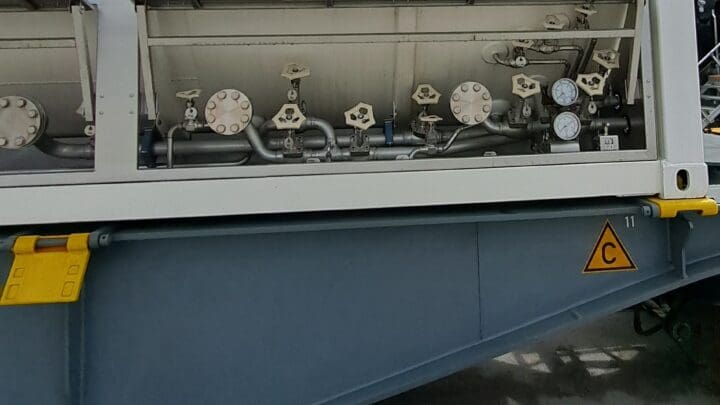
The proposed amendment to section 178.277 of the US hazardous materials regulations would clarify that the requirement for three mutually independent shutoff devices, already applicable to liquid filling and discharge openings, also covers vapour-phase openings used for vapour recovery.
These connections are used during operations such as tank pre-cooling, filling and pressure reduction, when displaced vapour is recovered from the tank. PHMSA’s proposal follows amendments to the UN Model Regulations (UNMR), which clarified that the three-device requirement also applies to vapour-phase openings.
Under the existing rules, the first shutoff device must be a stop valve positioned as close as reasonably practicable to the tank jacket. It must also be capable of being closed from an accessible position on the tank in the event of an incident.
The extension is intended to provide equivalent protection against accidental releases from vapour connections, recognising that these can also present a potential escape route for flammable gases.
The proposed changes would apply to tanks constructed after 1 January 2029. Tanks built before that date without the additional vapour-side shutoff devices would be allowed to remain in service, meaning operators would not face a mandatory fleet-wide retrofit programme.

The implications will therefore fall primarily on tank manufacturers, which will need to incorporate the additional shutoff arrangements into new designs, and on tank owners specifying equipment for future purchases.
The proposal is part of PHMSA’s wider effort to align US hazardous materials transport requirements with international standards. It is specifically concerned with tanks carrying flammable refrigerated liquefied gases, rather than conventional ISO tank containers generally.